Three things publishers should take away from ATS London
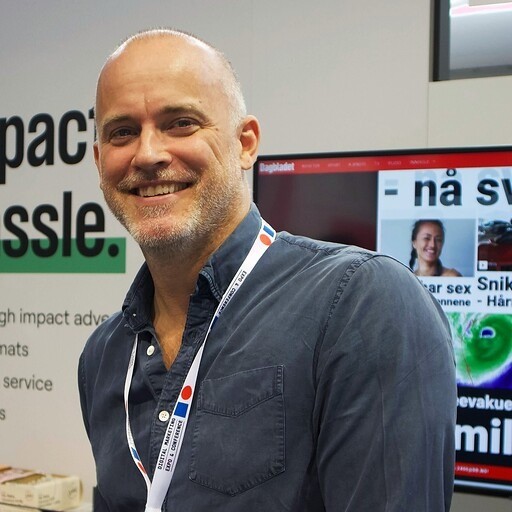
ATS London is a staple in the adtech calendar. It always gives the industry a good read on where programmatic is heading, and this year was no exception - the buzz was there from start to finish.
I spent the day listening to leaders from both sides of the auction, and three themes kept coming up. The first was sell-side decisioning and containerisation, which moves buyer intelligence closer to the impression. The second was agentic advertising, and what AI agents are already doing for deal set-up. The third was tokenomics, or how to make sure AI actually earns its keep if it’s to become a core part of language models.
Here's what each of them means for publishers, and what I'd be asking your adtech partners about now.
1. Containerisation brings buyers closer to the impression
If one topic dominated ATS London, it was containerisation. Put simply, it lets DSPs and data partners run their own algorithms inside the exchange's infrastructure. Decisions get made right next to the impression, rather than after a journey to an outside server and back.
PubMatic's Rajeev Goel talked through how the company's Decision Fabric does this. The round trip between SSP and DSP costs roughly 300 milliseconds, and handing that time back means buyers can run bigger, richer models. He expects smaller advertisers to benefit most, as they have less budget to spend on learning. And more of these advertisers buying programmatically means more competition for publisher inventory.
Index’s Andrew Casale took the idea further in his fireside chat with ExchangeWire's Ciarán O'Kane. Containers are starting to talk to each other, he explained, so a request that arrives missing a signal can be topped up by another partner's container before a buyer sees it. Bidding algorithms say yes to less than 1% of the requests they see, so turning even a few of those noes into yeses adds up. His example was Gracenote adding show-level context to CTV inventory, providing a model that would otherwise have passed a reason to bid. Or, as he put it, "there's a party in the cloud and everybody's invited."
From where I sit, anything that speeds up the auction is good. Every millisecond saved can go into a smarter decision or a faster experience for the reader. It was also well received by the demand side, and this is important because publishers only see the upside when buyers actually use these tools. As Casale said, "quite literally, time is money."
My advice is to ask your SSPs what's running in their containers and how enrichment is being applied to your inventory. And make sure the signals you pass in the first place are clean and consistent, because enrichment works best on a solid base.
2. Agentic advertising is starting to do real work
Agentic advertising has been a talking point for a while, but ATS showed it moving from theory into practice. Thousands of AI-powered PMP deals have been set up this year, with users typing a request to an agent rather than clicking through the interface.
For publishers, that's encouraging. Deal set-up eats up time on both sides, so anything that cuts the admin makes it easier for buyers to transact directly with your inventory. That said, it’s worth keeping in perspective. From what we’re seeing, very little money is changing hands through agents yet, so there’s time to get the groundwork right. That groundwork starts with packaging. If an agent is matching briefs to deals, then your deal descriptions, audience definitions and inventory data need to be accurate and easy to interpret.
The audience decisioning panel, with Ogury's Nicolas Bidon, ExchangeWire’s Rachel Smith and dentsu's Zac Selby, added a further note of caution into the mix: the strategy needs to be settled before anyone hands agents the keys. The same goes for the sell side, because automation will scale whatever you give it, good or bad.
3. Tokenomics comes down to the use case
The tokenomics session was one of the most practical AI discussions of the day. DEPT®’s Molly Deaville opened by arguing that AI should be judged on the business value it delivers, rather than at the level of individual tokens. Meanwhile, Intelligent Assistance’s Fern Potter urged teams to agree what they want AI to do, and how they'll measure it, before building anything. She also pointed out that adoption depends more on people and change management than on the technology itself.
We know that margins are tight for most publishers, and every new tool in the stack comes with a cost. So the takeaway here is that, before adding an AI-powered product, you should be clear on which revenue or efficiency number it should move, and then check that it does.
*Taken together, ATS London pointed towards a faster, smarter auction. Sell-side decisioning and containerisation bring buyer intelligence closer to the impression, agentic advertising is starting to take the friction out of deal-making, and a clear-eyed approach to tokenomics keeps AI spend honest. For publishers, the value of all three depends on the quality of what goes into them. Get your signals, deals and priorities in order now, and you'll be perfectly placed to join the party in the cloud as programmatic moves forward.
It was a fantastic day, and I came away with a full notebook and a long list of follow-up conversations. Thanks to ExchangeWire for bringing everyone together. I'm already looking forward to next year.*